Bernese Bedrock
Project-Story #01
Text: Rainer Brenner
Photography: Joëlle Lehmann
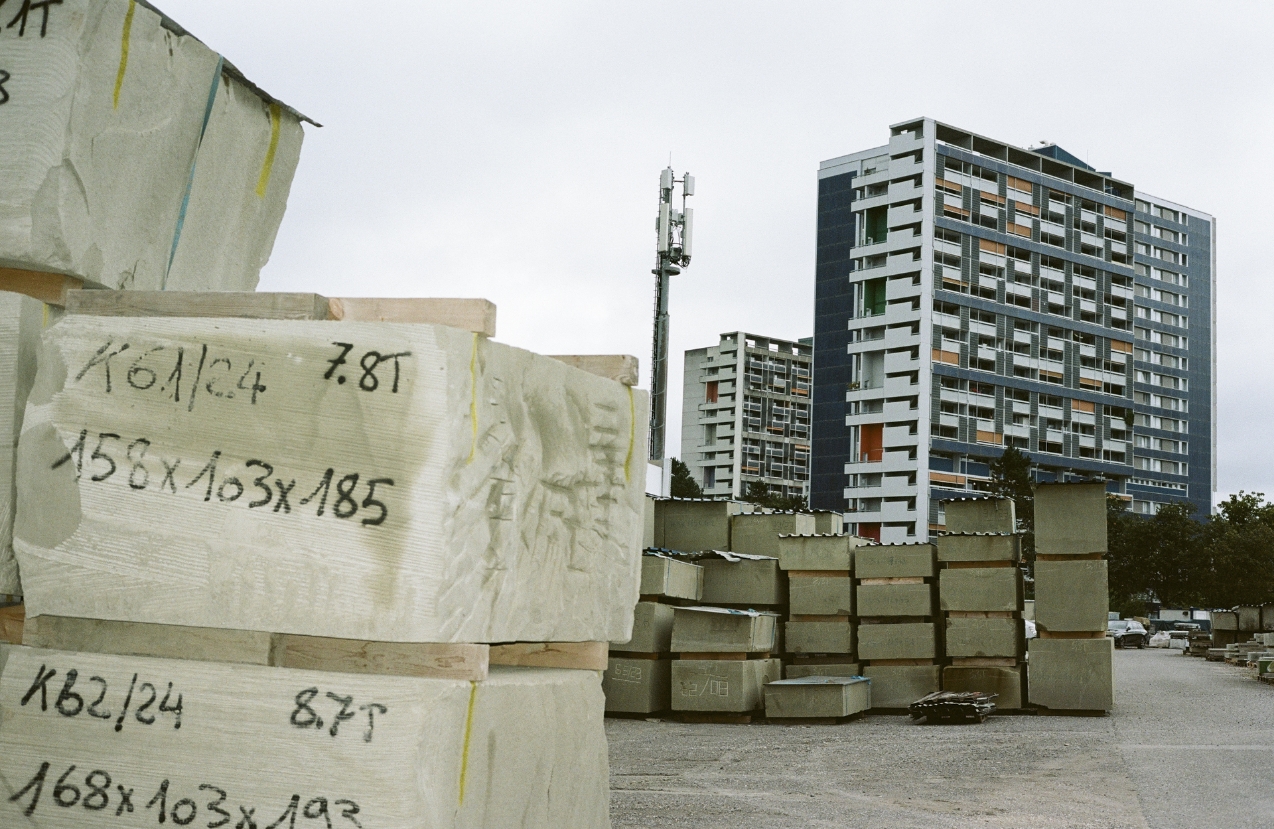
At the gates of the city: the stone reserves at the workshop in Bethlehem.
Local down to the foundation: The façade of the Kaiserhaus was refurbished with original Bernese sandstone. We followed the ‘bedrock’ from the quarry to the old town.
‘It’s not as noisy here as people think,’ André Schär explains as he takes us through the quarry in Ostermundigen. The machines do in fact make their way through the stone gently – a calm, almost meditative sound.
‘If they put out a CD, I would buy it,’ Schär jokes. All the machines here have their own name, like they are part of the team. ‘Grosi’, for example, has been on the team since the 60s. ‘Despite the new technology, software and 3D scanners, our job still relies on a lot of manual work,’ Schär says. ‘First the field is cleared, and the area is cut out with a rock-cutting machine. Then the soil is separated, and the stone blocks are taken to the plant in Bern Bethlehem to be processed further.’ There, the sawyer cuts them into appropriately-sized slices, the milling operator forms them and the stonemason puts on the finishing touches before the final product is fitted precisely into the façade of the Kaiserhaus at the construction site.
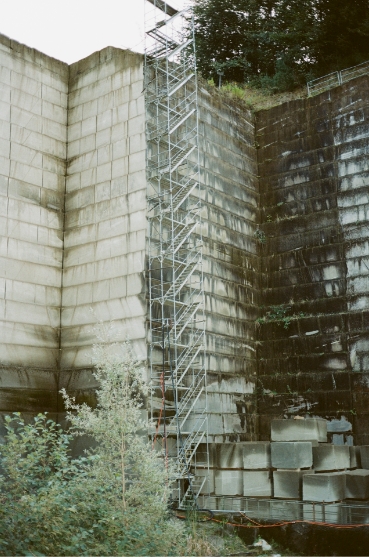
Underground: the mine in Ostermundigen.
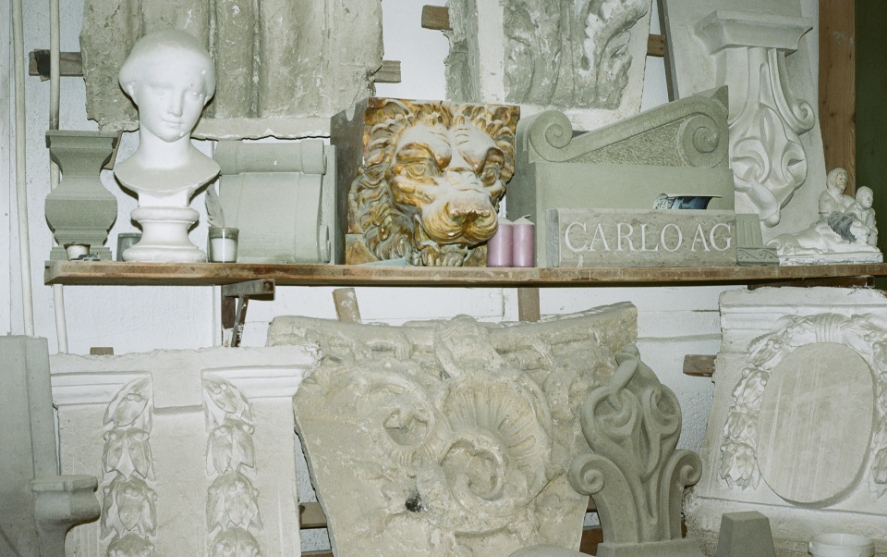
Mouldable and soft: the multifaceted Bernese sandstone.
Making history tangible
We meet Stefan Schmid from the architecture firm Aebi & Vincent at the construction site. The firm specialises in refurbishing historical buildings in and around Bern. ‘The idea behind refurbishing has fundamentally changed,’ Schmid explains. ‘People used to try to make everything seem new. From a modern perspective, that is outdated. It is more important to feel the history of the building.’ This applies to the Kaiserhaus project too: In the past 12 years, its façade has been analysed piece by piece.
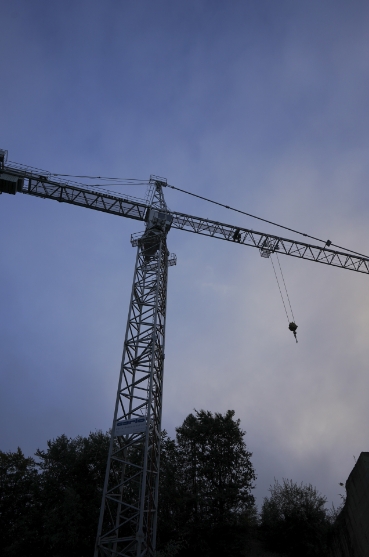
Like at a construction site – just calmer.
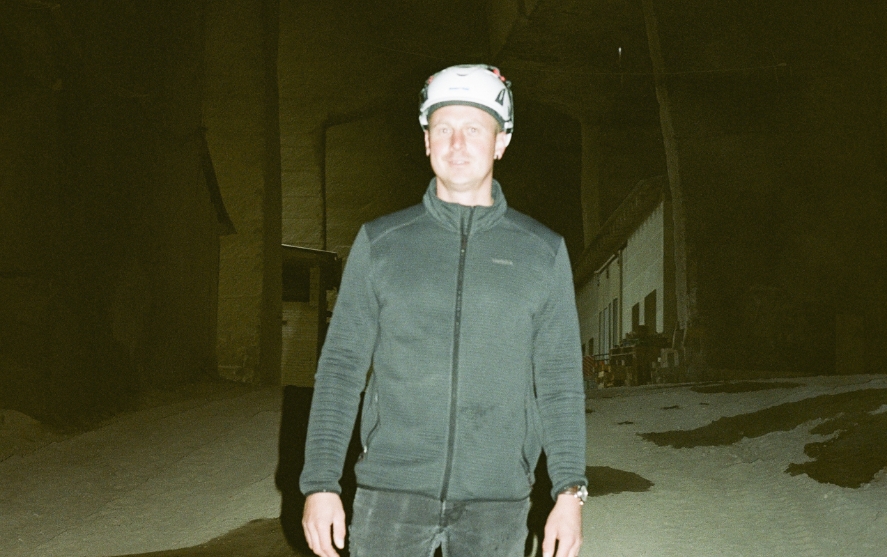
Between mine and computer: Stonemason André Schär.
If a stone needed to be replaced, it was measured, sketched and sent to Andrè Schär’s team as an order. ‘The curved pieces were really interesting: These had to be arranged and poured by hand so that the arch would hold together properly like during the Middle Ages. ‘Stonemasons don’t do this much anymore. That’s why we think it’s so exciting,’ Schär and Schmid said.
More than just a façade
‘We architects have an idea about what it should look like, but how this can be implemented and simplified has to always be discussed with the manufacturer,’ Schmid says. For four years, the architects have been working closely with the stone processing company. Now they are standing in front of the finish façade, visibly pleased with it. However, the two couldn’t come to an agreement on whether the Bernese bedrock will make a comeback. ‘Sandstone is easy to process, but it is soft and porous. Aside from restorations, I don’t see any future in it,’ the architect says. ‘People often paint the Bernese sandstone in a negative light,’ stonemason André Schär responds. ‘But if you install and protect it properly, it will last a very long time.’ The material also gets good marks in terms of sustainability and regionality. This makes the walls of the Kaiserhaus a tangible piece of Bernese history and not just a façade.
From fire to a sandstone city
During the Bern city fire of 1405, flames raged through the city, which at the time had a lot of buildings made of wood, destroying the majority of the buildings. The council then ordered the use of stone façades. The material was gathered from local quarries, which at the time were in the area of Bern now known as Bärengraben (bear pit). With the expansion of the railway system in the middle of the 19th century, Bernese sandstone even went from a local building material to an export commodity and was used for buildings all throughout Switzerland until the beginning of last century when it faced increasing competition from newer materials.
Now it is only still mined in small quantities in Spiegel am Gurten, Krauchthal and Ostermundigen. Depending on the location and depth, it could be yellow, blue or green. The soft, porous material is mainly used for restorations, oven construction and sculptures. Around 20 cubic metres of sandstone were used in the renovation of the Kaiserhaus.
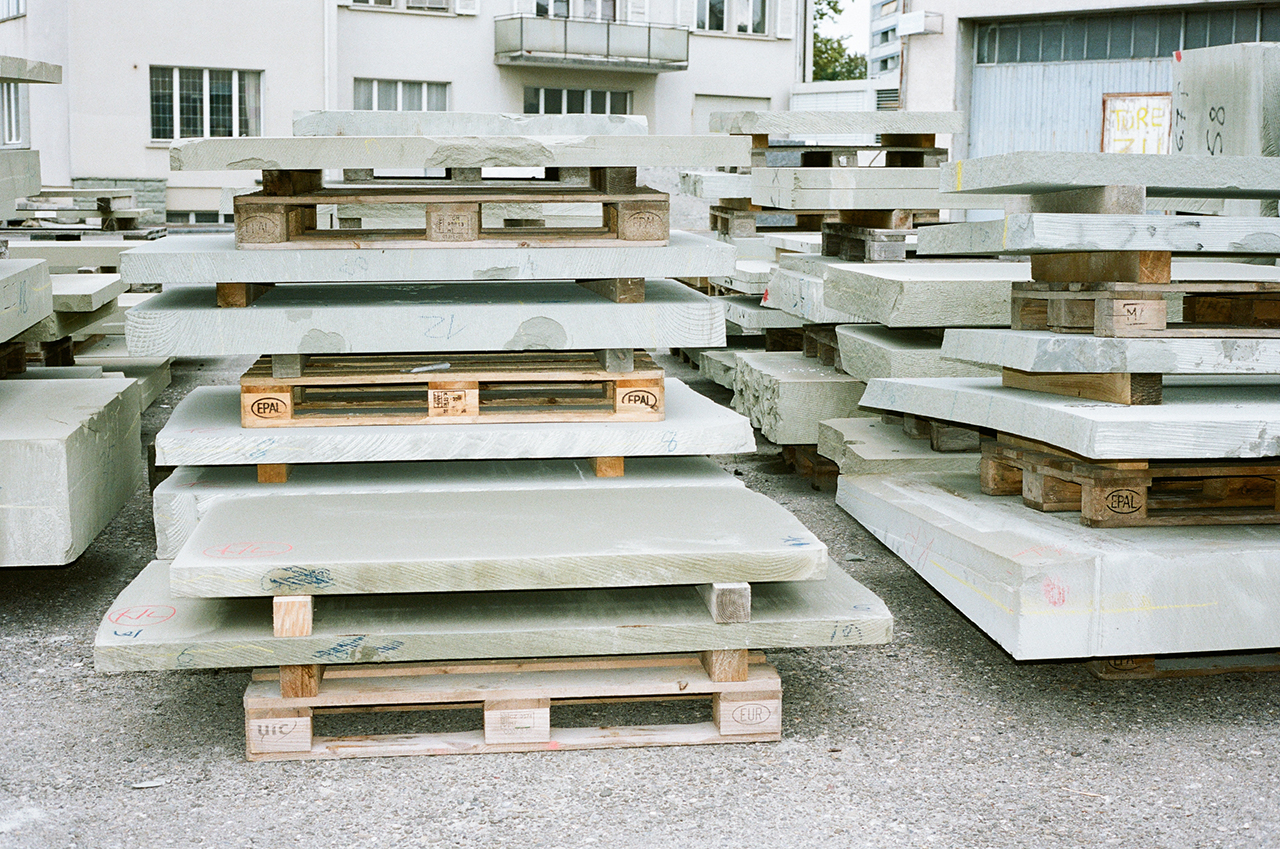
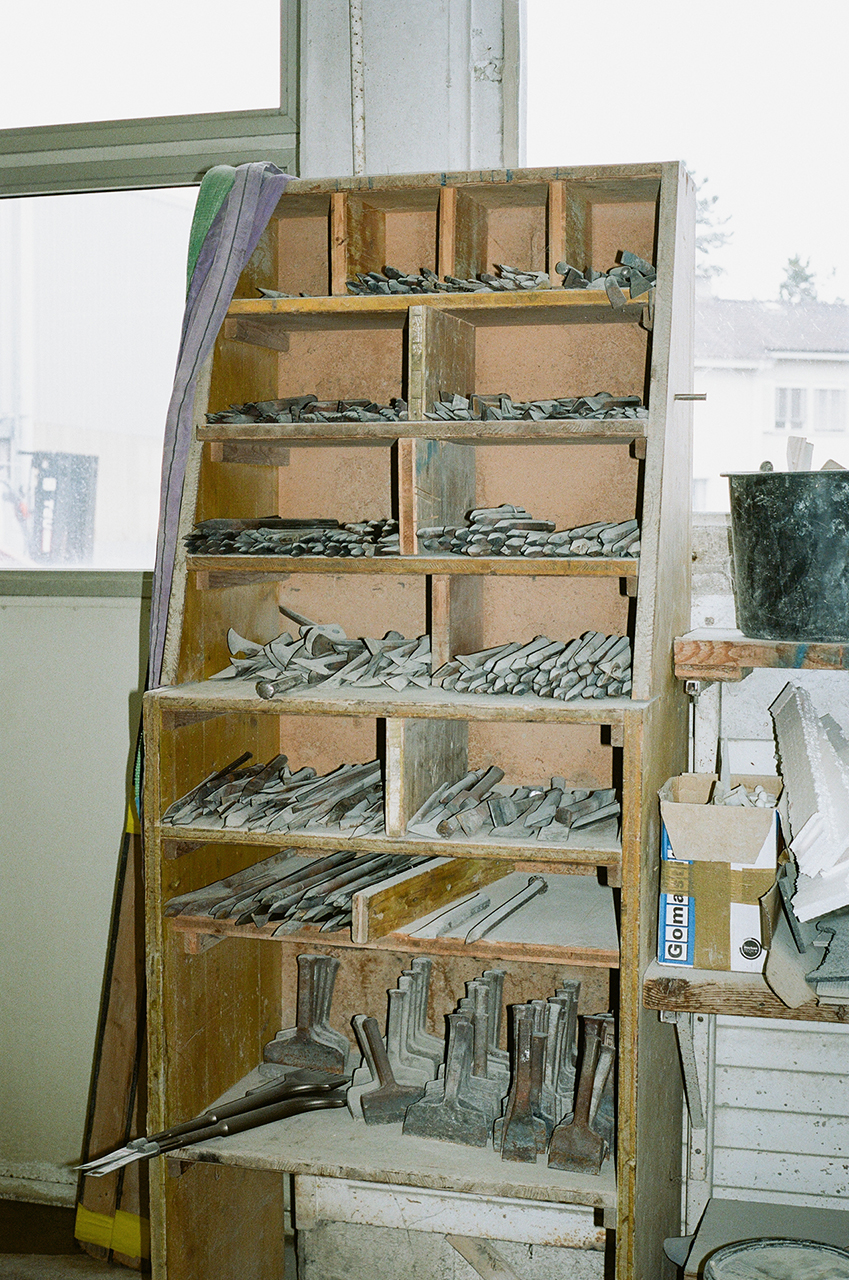
At the workshop, manual work meets…
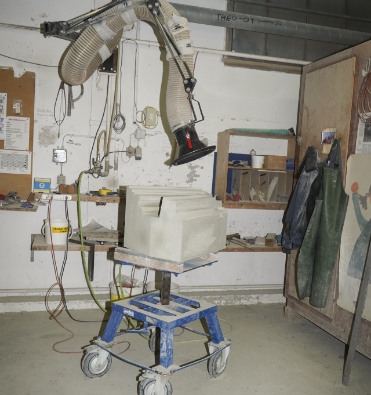
…precision and technique.
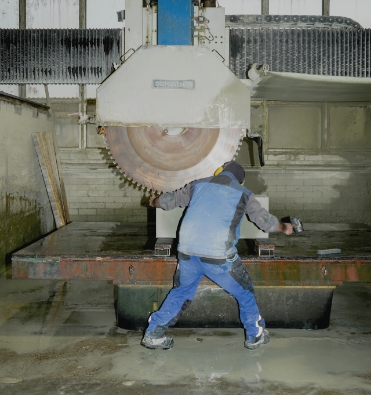
Blocks are cut up with the ‘singing milling machine’.
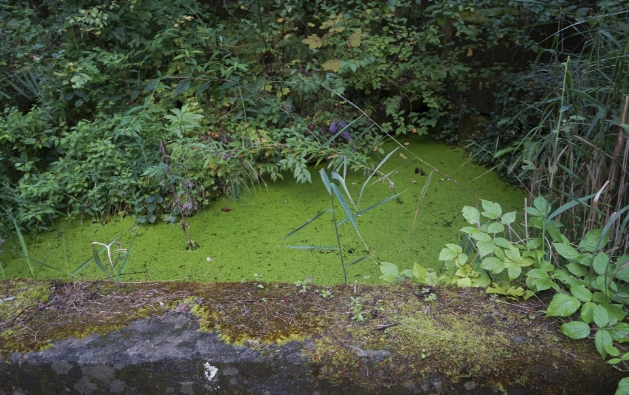
Naturally sustainable: Rare species of frogs are croaking in the pond on the site.
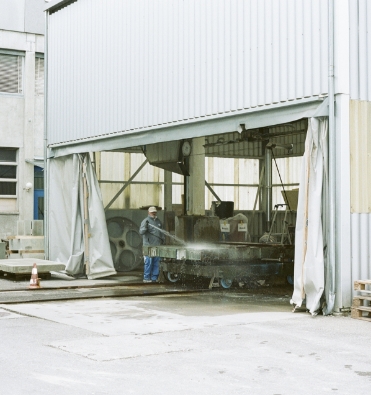
A new blank will be prepared for cutting.
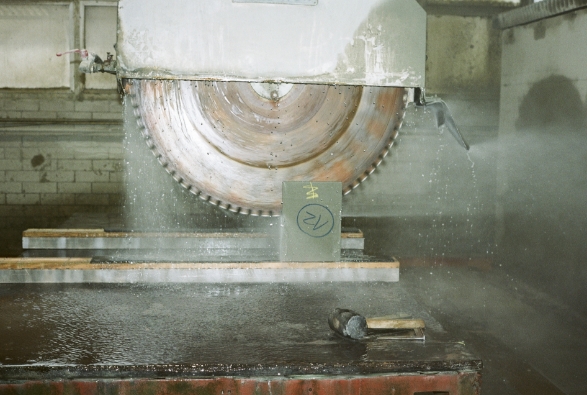
Newsletter
Subscribe to our newsletter and stay in contact with the Kaiserhaus
to benefit from inspiration and offers.