Flour, water, life
Cuisine-Story #01
Text: Rainer Brenner
Photography: Joëlle Lehmann
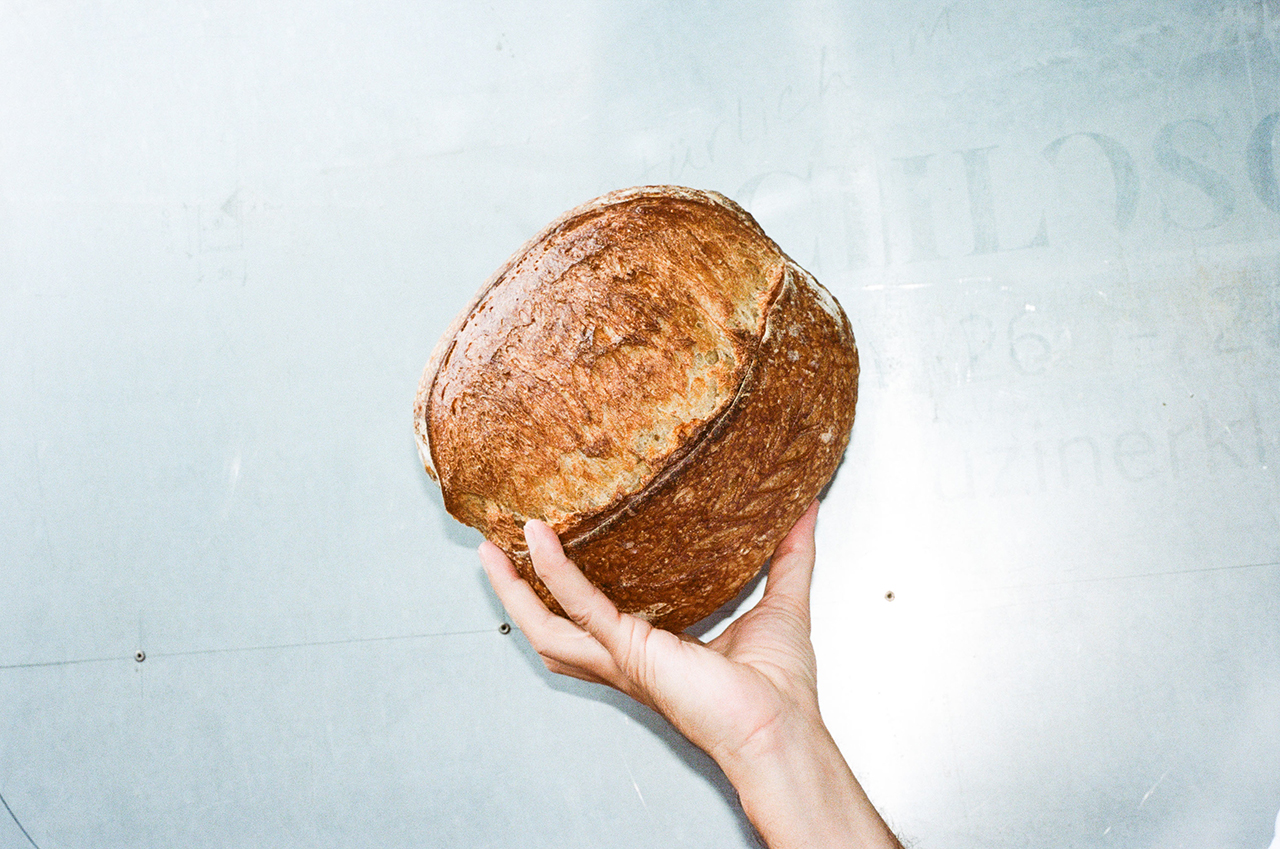
Is good bread just a matter of taste? Not quite.
The amount of work and kinds of values and people involved in food production is almost impossible to grasp. The restaurants at the Kaiserhaus would like to help people understand. We start out with good bread and follow this staple from the mill to the bakery.
It starts with flour. It leads back to the Emmental, the former breadbasket of the canton of Bern. Just an hour away by car, between hills, fields, and old farms, you will find the Schwandener Mill. A wooden house with history. Miller Simon Baumann and his family process grain from the region here on five narrow floors with machines, some of which are from the 1930s.
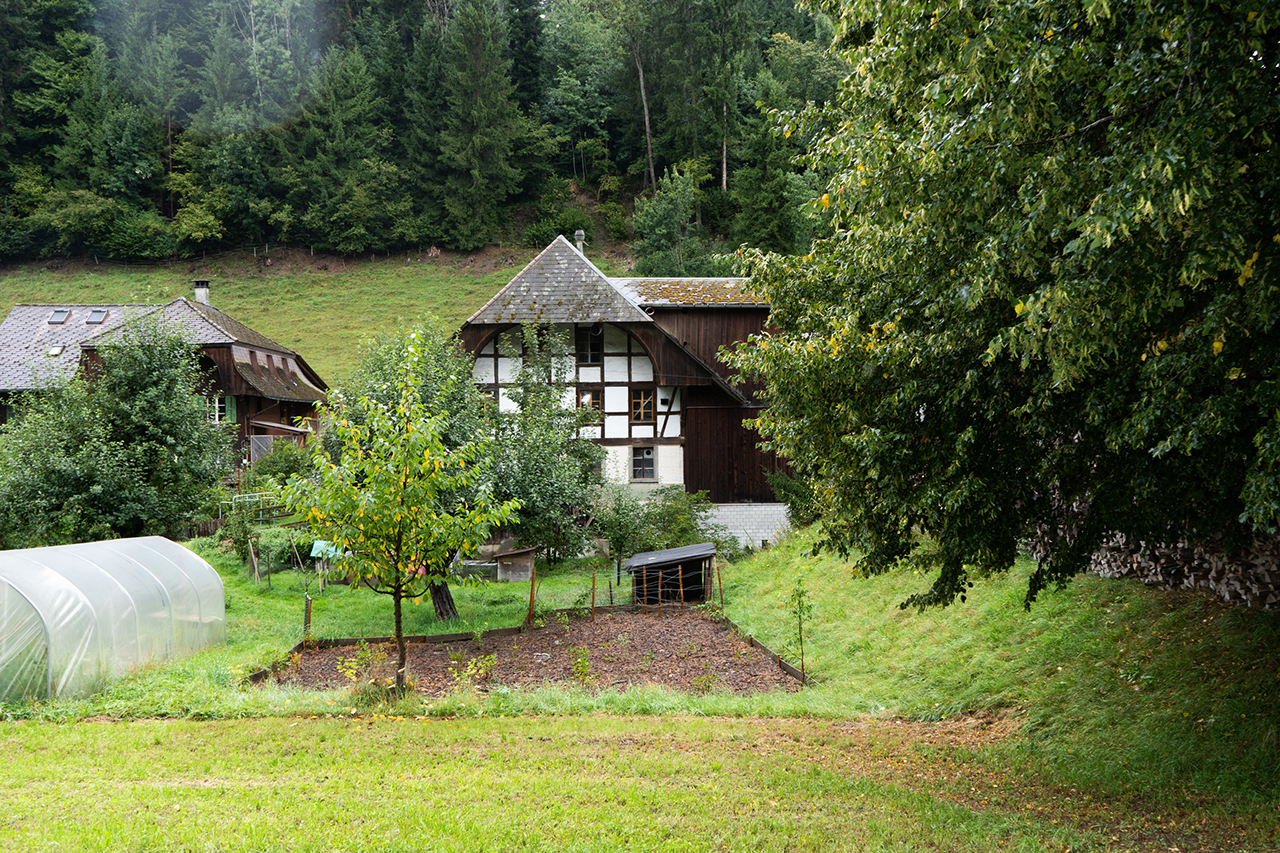
The Schwandender Mill is in the middle of green Emmental.
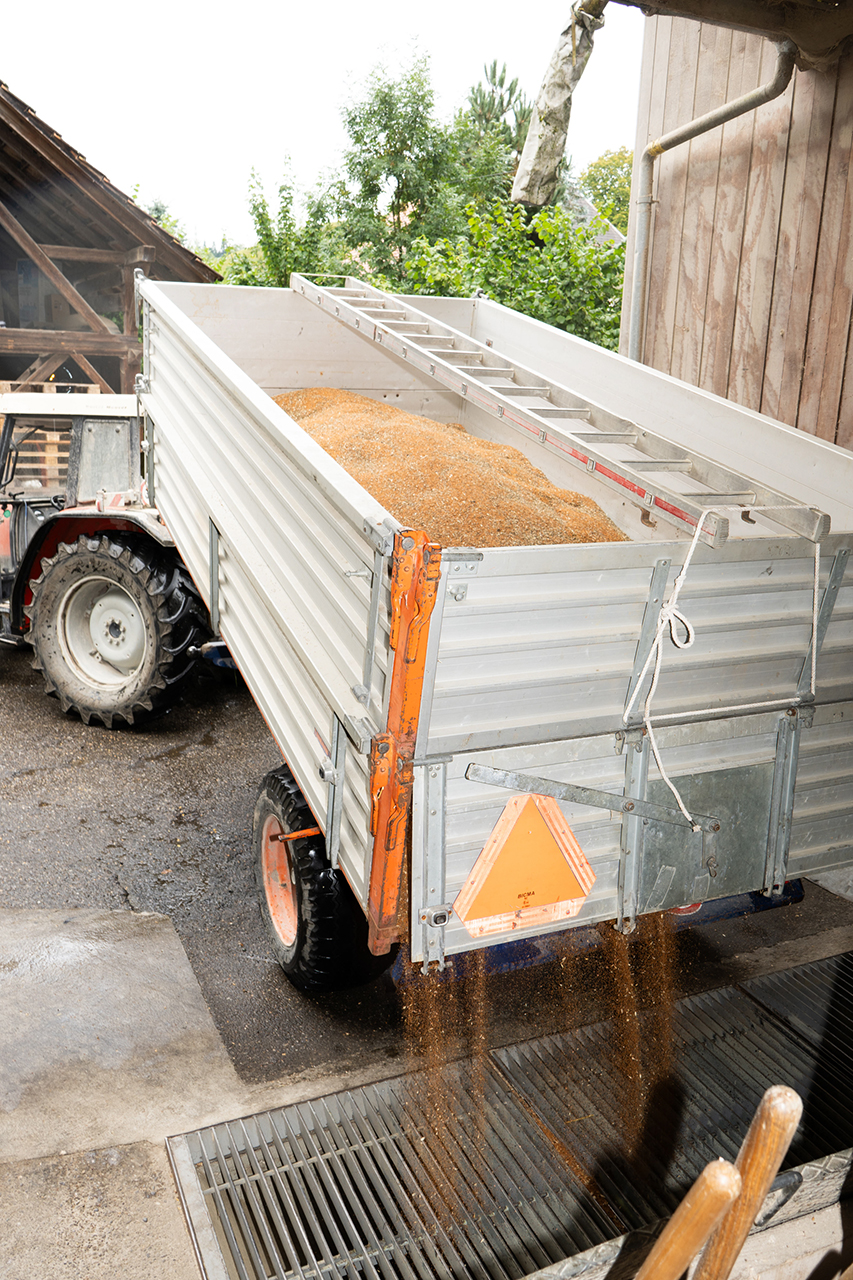
The grain is delivered here from farms in the region.
Simon, a former carpenter, took over the mill in 2016 and has not stopped milling ever since: wheat, spelt, oats, barley, buckwheat, and lentils. Around 360 tonnes of grain from farms in the region are processed here over the course of the year.
Less is more
A tractor unloads spelt in front of the house. The grain goes through the blow room, is cleaned of stones, weighed, and milled several times. Before 100 kilos of spelt can become approximately 50 kilos of flour, it goes through the entire house eight to twelve times.
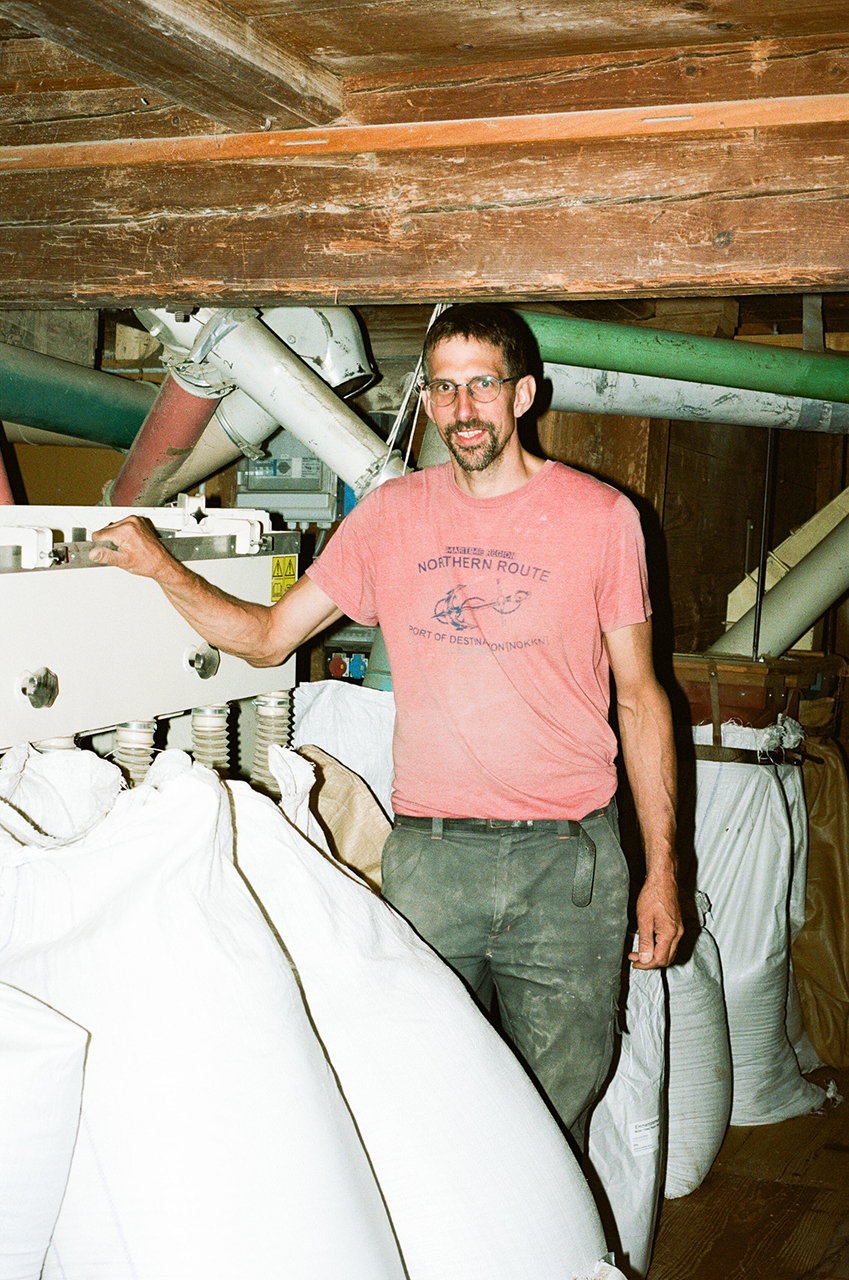
Simon Baumann and his team working.
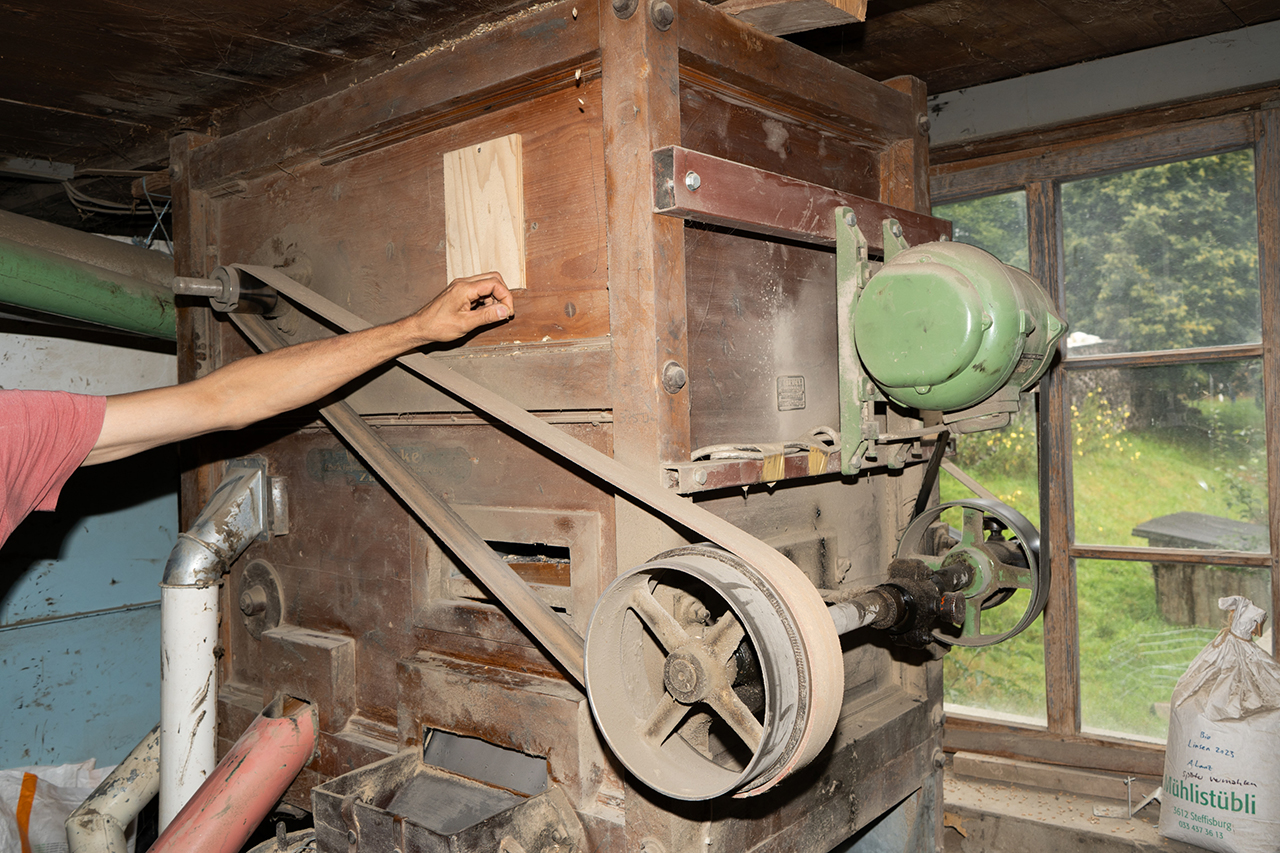
A lot in this 1830s wood mill still works as well as it used to.
Why all that work? ‘We work with small amounts and careful processes. This preserves vitamins and minerals and makes additives unnecessary,’ Simon explains. But this doesn’t standardise the flour. It is more vibrant: ‘It reacts differently when baking, depending on the harvest. That is the natural variation.’
The work in the mill is physical. And sure, the days are longer than they are worth. ‘But if you do it with passion, you can make a living out of it.’
New traditional values
But why are we suddenly interested in this craft once again? Why do city dwellers queue up for sourdough bread as if it were the latest sensation? ‘I think we’ve simply lost touch,’ says Severin Aegerter, member of the Kaiserhaus cuisine team. ‘To the products, to the producers, to quality.’ When he grew up in Simmental, great food was never a luxury for him. It was an everyday experience. His extended family’s sourdough bakery with a wood oven left an impression on him.
Industrialisation and standardisation have caused many things to lose their inherent value. This is disappointing not only for consumers, but for producers too: They look forward to feedback and input and are happy and proud when they see how much people enjoy their products. ‘We would like to restore this interaction to a certain extent at the Kaiserhaus and maybe help bridge the urban-rural divide.’
Liveable environment
We learn how milled flour turns into bread in the Copain bakery at Löscher-Areal, the site of the Alte Feuerwehr Viktoria in Bern. Everything is calm and relaxed this morning. You can smell the sourdough croissants from the oven as the bread dough is resting in containers in the corner.
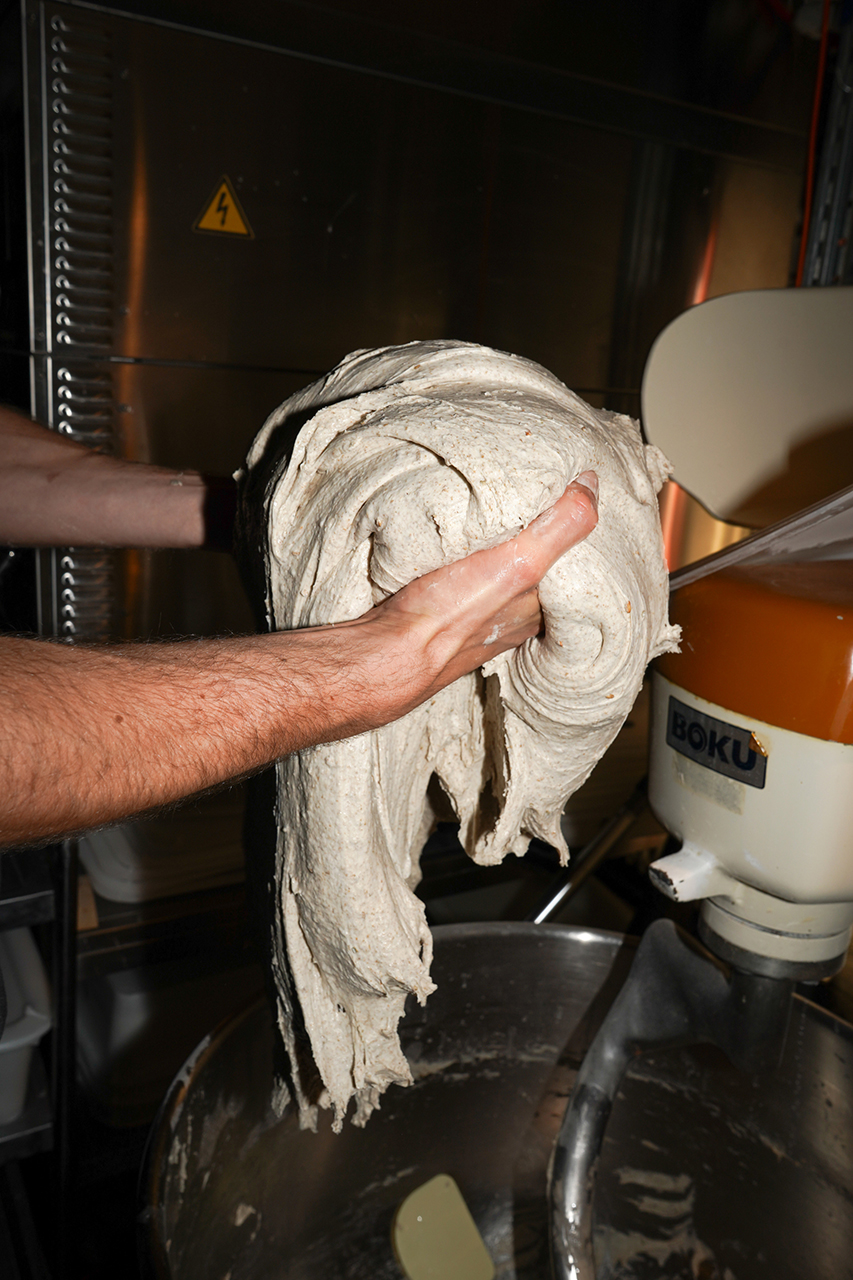
Knead, rest, shape, and bake.
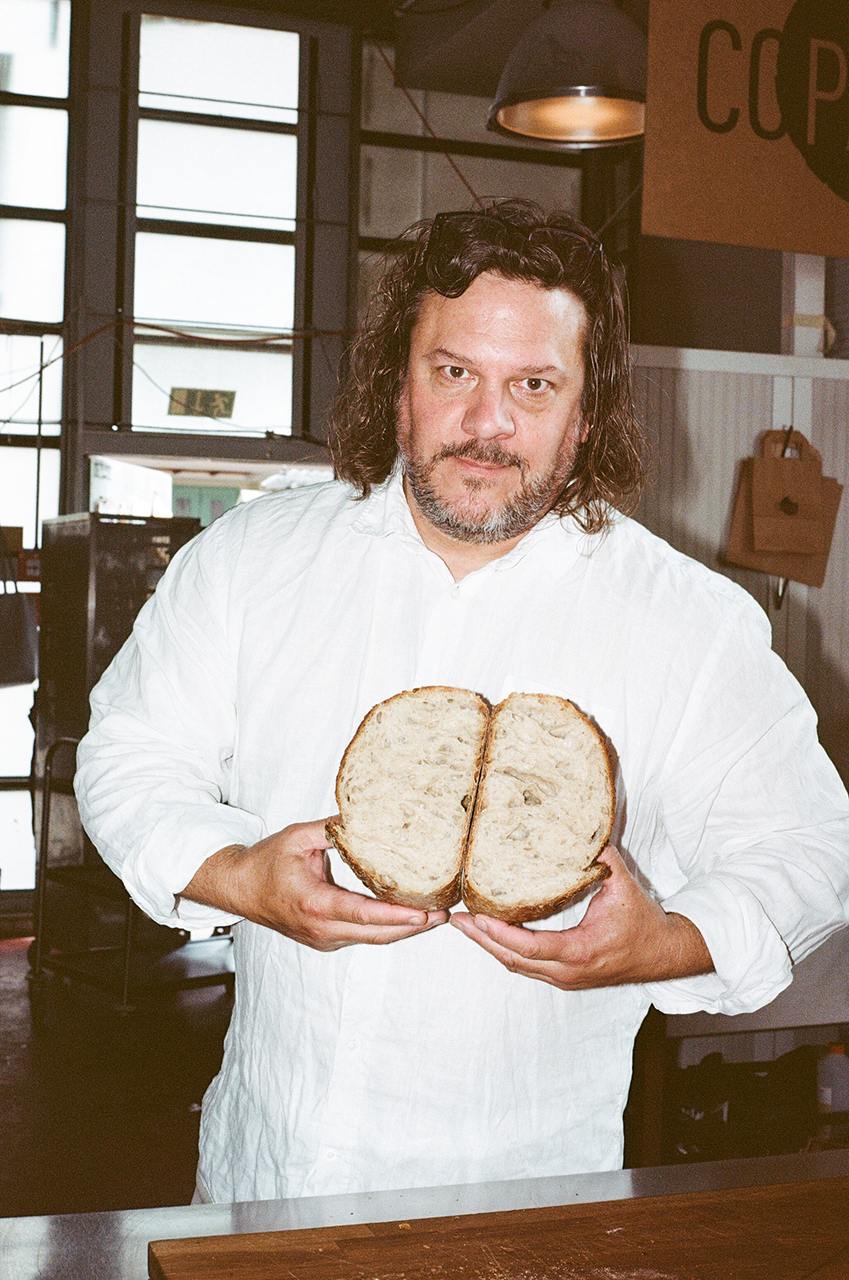
Baker Patrice.
Flour, water and life: fundamentally, that’s all it takes for a good sourdough, explains baker Patrice Bachmann and points to a small jar with the ‘mother’, a sourdough starter that is over 30 years old, which was passed onto him by a fellow restaurateur. The yeast and lactic acid bacteria it contains are kept at a suitable temperature and are regularly fed flour.
Against time
Because a good sourdough is alive until you put it in the oven. ‘That’s what sets our sourdough apart from what you will find at the supermarket: The cultures in there often die after a short time because larger bakeries just don’t have the time to care for them properly.’
In order for the sourdough to develop properly, Patrice lets it sit for four and a half hours and flips it during this time with practised movements, so that a strong gluten network will form. Next the dough is divided and rounded using a scraper. The dough is then carefully folded again before being put in a proofing basket and left to rest in the refrigerator for at least 20 and up to 44 hours. This process is call dough proofing. ‘The longer this process lasts, the more digestible, aromatic, nutritious and durable the bread becomes. Gluten is broken down, and nutrients are released in the process. Finally, the dough goes in the oven where it is baked in a hot, steamy environment, which results in a rustic crust with lots of roasted flavours. ‘Bread is only as good as each step in the process of making it,’ Patrice summarised.
Bread alone…
…is not enough for the bakery to survive. That’s why Patrick hosts workshops to pass his passion onto other sourdough fans. ‘I started baking during Covid. I am still learning new things, and I love sharing my knowledge and experiences. And it is not just the bread that is good for you, but also the process of making it. I notice this in myself and those who take my workshop, who leave it feeling very balanced. When you work with sourdough, you constantly have to read, learn, and adapt.’
Food and drink at the Kaiserhaus
Contemporary and timeless. As local and fair as possible. From farms and producers who we know. Cooked, baked, mixed, or enhanced with skill, diligence, and joy. All Kaiserhaus restaurants are run with people in mind. Because good food and drinks connect us all.
Brasserie Kaiser: Sounds classy, looks like it too. But tastes familiar and delicious with wine and beer. Cosy upholstered benches inside, a secluded courtyard outside. A place to meet, one you want to look into and out of. And a menu that makes everyone hungry.
Kaiser Deli: Can you imagine a bakery that does a little more? Thanks to our own bakery and in-house charcuterie production, a lot of food is made by us or sourced locally. Maybe a sandwich with our signature sausage to take away? Or something to warm you up at home? Have a look at what we have.
Hof_Bar: This is where the music is played – over our own little radio station, for example. The coffee is elegant, the drinks unique, but not everything is polished here. A lot of it is playful and spontaneous. You can experience something special here. Or just have a drink.
Newsletter
Subscribe to our newsletter and stay in contact with the Kaiserhaus
to benefit from inspiration and offers.